



Ferrule Inserts for Precast Concrete: Selection, Installation and Quality Control
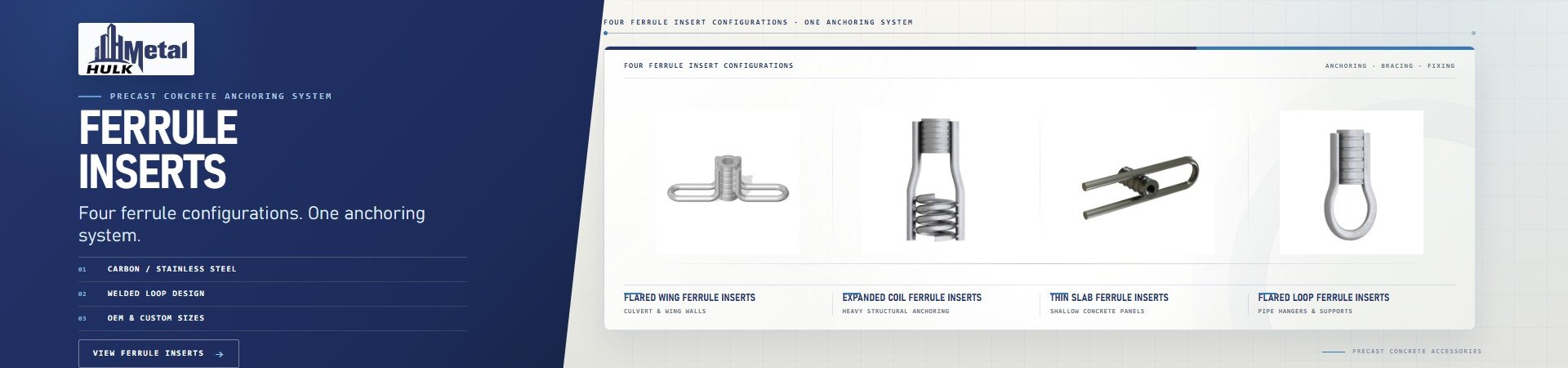
Ferrule inserts create dependable threaded connection points in precast concrete. In a wall panel, beam, column or other factory-made element, the insert is cast into position so that a bolt or stud can be attached after demolding, during transport or on site. Because the insert becomes embedded in the finished element, its thread, anchorage, position and protection must be correct before concrete is placed.
This guide explains what ferrule inserts are, how to select them, and what project teams should check during installation and quality control.
What Are Ferrule Inserts?
A ferrule insert is a cast-in metal accessory with an internally threaded, closed-end body and an anchorage such as a loop, wing or expanded section. The thread is usually UNC or NC. The anchorage transfers force between the connection and surrounding concrete, while the open end is positioned at the element face so a compatible bolt or stud can engage the thread.
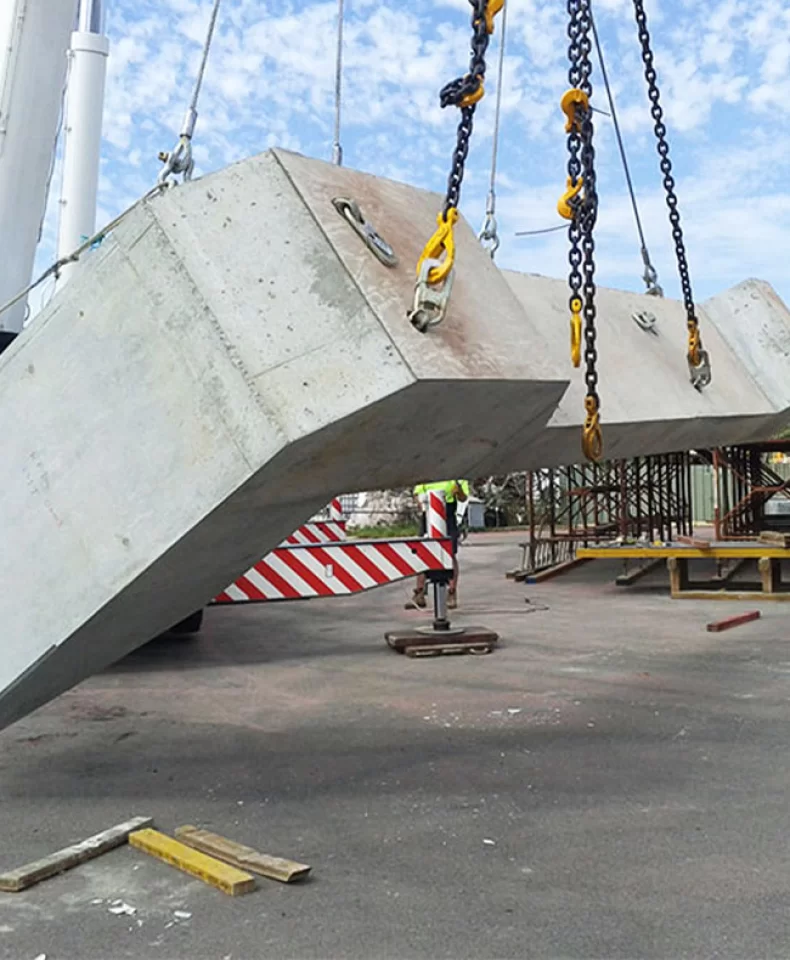
They are used for lifting, turning, temporary bracing, fixing and permanent connections. A lifting arrangement must work with the correct clutch, swivel plate or recess former. A permanent connection must account for bolt engagement, bearing hardware and the concrete around the insert. The same insert should not be assumed to suit every event in the element’s life.
A ferrule insert is not the same as a coil insert. A ferrule insert carries a machined thread inside a closed-end body. A coil insert uses a continuous wire coil. The recess may look similar, but bolt engagement, spacing criteria and compatible hardware differ. The two interfaces are not interchangeable.
Where Ferrule Inserts Are Used
Precast concrete ferrule inserts appear across many types of structural and architectural elements. Typical applications include:
- Lifting and turning wall panels, beams, columns and other precast units.
- Securing temporary braces during transport, storage and erection.
- Forming permanent bolted connections for façades, walls and structural interfaces.
- Providing fixing points for machinery, cladding or barriers where access to the reverse side is restricted.
Each application has a different load path. A lifting point may experience dynamic effects, sling angles and repeated handling. A permanent fixing may be governed by tension, shear or combined loading.
Common Ferrule Insert Configurations
The ferrule range supplied by HULK Metal includes flared loop, straight loop, thin-slab, expanded coil, flared wing and wing-wall families. Published sizes include 1/2, 5/8, 3/4 and 1 inch UNC, although the combination depends on the selected family.
Flared loop inserts are common in general precast panels where the anchorage must distribute force into concrete. Straight loop designs suit details requiring a different anchorage footprint. Thin-slab inserts are intended for elements with limited body depth. Expanded coil designs provide another anchorage arrangement for the appropriate panel. Flared wing and wing-wall inserts address placement close to an element face or geometric restraint.
These descriptions are not a substitute for the selected product table. Two inserts with the same thread size can have different body heights, anchorage shapes and published load bases. The family name helps narrow the options; the drawing and design condition determine whether a particular model is suitable.
How to Select the Right Ferrule Insert
Selection must connect the concrete element, the bolt and the load event.
Load event and design direction
Establish whether the insert is for lifting, handling, bracing, tension, shear or a combined connection. Record the magnitude, direction and application point. Keep lifting and permanent cases separate because the governing requirements and hardware may differ.
Thread and mating hardware
Confirm the nominal diameter, thread series, threads per inch, bolt grade, length and coating. The bolt must engage the intended length of the internal thread. A diameter match alone does not confirm compatibility. The insert, stud, nut and washer should be reviewed as one connection.
Concrete strength and panel geometry
Use the concrete strength applicable to the stage, such as lifting or service. Panel thickness, casting face, recess depth, embedment and bottom clearance all affect the choice. A thin section can leave little room for the anchorage or bearing hardware.
Edge, corner and spacing conditions
Free edges and corners reduce the concrete area resisting breakout. The ferrule catalogue reviewed by HULK Metal gives a minimum edge distance of 1.5 times insert length and a minimum spacing of three times insert length on its general reduction drawing. Some families, including FI-21, FI-24 to FI-26 and FI-41, state a corner-distance spacing rule of two times the corner distance. The selected family page takes precedence where it gives a specific rule.
Orientation also matters. Tension reductions may apply when an insert is parallel to an edge. Apply factors to the selected table’s safe working load, not another family or a coil insert.
Finish and environmental exposure
Specify both insert and bolt coatings. Where the selected HULK Metal catalogue states that plated inserts are not designed for hot-dip galvanized bolts, record that restriction in the purchase order. Coating thickness and thread tolerance must remain compatible after treatment.
The Insert Is Only One Part of the Load Path
One common error is treating the published insert capacity as a complete connection capacity. The load path includes the bolt, thread engagement, insert body, anchorage, bearing hardware, concrete strength and breakout surface.
For shear, a steel bearing plate must bear on the concrete face to develop published capacity and reduce side or edge blowout. A swivel plate may serve lifting, while a washer or connection plate may be required for a permanent fixing. Without that bearing surface, the shear value is not a complete installation statement.
A free edge can govern before the insert reaches nominal capacity. A larger insert does not compensate for a short bolt, missing plate, unsupported corner or thin concrete section. Review the plan and section together rather than ordering from an insert code alone.
Installation Controls Before and After Casting
Correct installation begins with formwork preparation. Confirm the casting and finished faces, set out the insert in the correct position and orientation, and secure it against movement. Record recess depth and verify that the planned plate or washer will fit while leaving the required bolt projection.
Protect the internal thread before placement. Concrete, release agent or damaged plating can prevent proper engagement. After demolding, inspect the recess and remove temporary plugs or locators according to the approved method.
A compatible bolt should enter by hand. Do not force it to correct a form-position error or contamination problem; doing so can damage the thread and hide a larger interface issue. Any remedy should be reviewed against the project specification.
Quality Control for Ferrule Inserts
A practical inspection plan starts with incoming material identification and continues through packing. Check material grade and traceability, thread gauge fit, body and anchorage dimensions, loop geometry, finish, coating and thread protection. First-article approval should confirm the part against the drawing before routine batches proceed.
Where required, tensile or other performance testing can verify the selected design. Batch records should connect tested or inspected items to the delivered quantity. Pre-shipment inspection should also check marking, packaging and quantity so compatible inserts and accessories are not mixed at site.
Inspection requirements vary by project. Infrastructure or heavy-lifting work may require project-specific testing, third-party inspection or additional documentation. Agree these requirements before quotation and production.
Information to Include in a Ferrule Insert RFQ
A traceable quotation needs more than a product name. Include the panel plan and section, casting face, load event and design reaction. State the bolt diameter, thread series, length and coating, plus the intended plate or washer. Provide concrete strength, edge and corner distances, nearby openings, finish, quantity, delivery schedule and inspection requirements.
This lets the supplier match the drawing with the published range and identify missing data before manufacture, reducing late changes after formwork preparation or casting.
Why Focus on HULK Metal?
HULK Metal’s precast concrete accessory range includes ferrule inserts in 1/2, 5/8, 3/4 and 1 inch UNC sizes, with several anchorage geometries for different panel and edge conditions. The quotation process is built around the whole connection rather than a thread size alone. The team reviews the insert family against the panel section, thread requirement and available edge or corner distance, and flags missing information before quoting.
The company operates under ISO 9001 quality management and has integrated metalworking and supply-chain resources since 2000, serving buyers in more than 100 countries and regions. For ferrule inserts, quality control can cover material, dimensions, thread identity, surface condition, coating, tensile testing and pre-shipment checks. Custom testing and third-party inspection can also be discussed for project-specific requirements.
HULK Metal also supports matching insert families with mating hardware, coordinating production, inspection, packing and shipping, and maintaining records for repetitive orders. That is useful to precast producers seeking dimensional and documentation control, and to distributors that need a broader supply base without losing accountability.
The best starting point is an RFQ containing the panel drawing, load direction, bolt specification, edge conditions and required finish. HULK Metal can then compare the application with its published range and help identify the information needed for a reliable quotation.
Article Navigation
PRECAST CONCRETE ACCESSORIES
OTHER RELATED ARTICLE
Other Precast Concrete Accessories You Might Want to Know
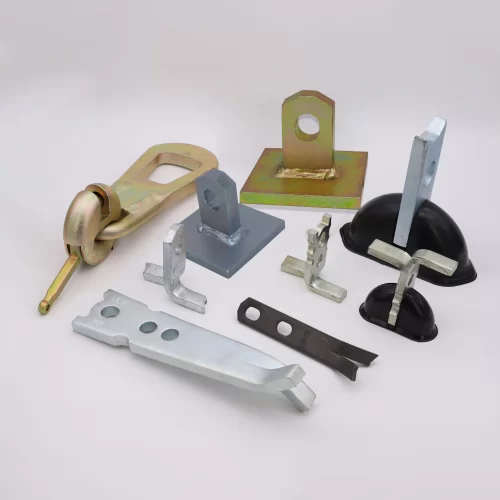
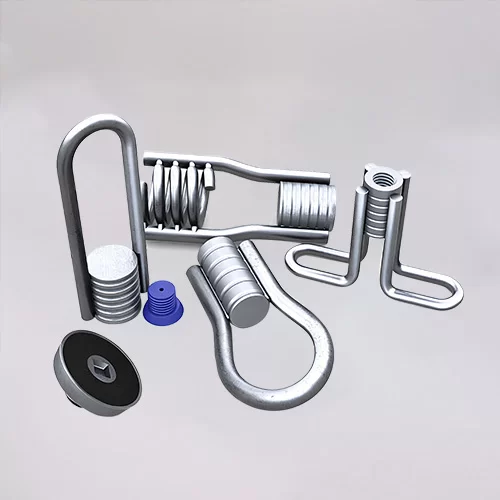
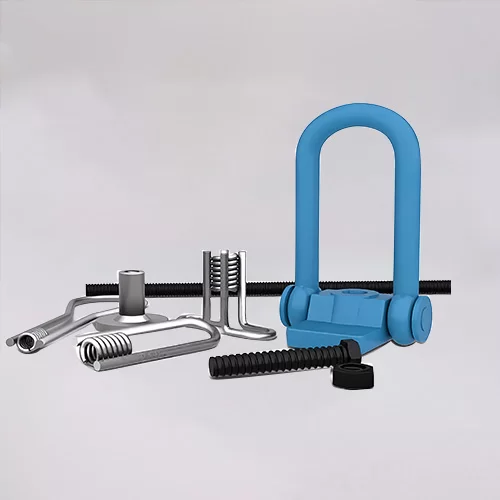
You can click to learn more about HULK Metal precast concrete accessories such as lifting anchors, precast sockets, spread anchors, shuttering magnets, cast-in channels, wire loop boxes, and other precast concrete accessories you might want to know.