



How to Install a Lifting Socket in Precast Concrete?
lifting socket is a comparatively small component, but its role in precast concrete handling is critical. Cast into the element before the pour, it provides a threaded or otherwise compatible connection point for a lifting loop, swivel hoist ring, or approved lifting accessory. Once the concrete has hardened, the socket becomes part of the permanent geometry of the element. The lifting attachment must therefore match not only the socket thread, but also the concrete anchorage, lifting angle, bracket clearance, and intended handling sequence.
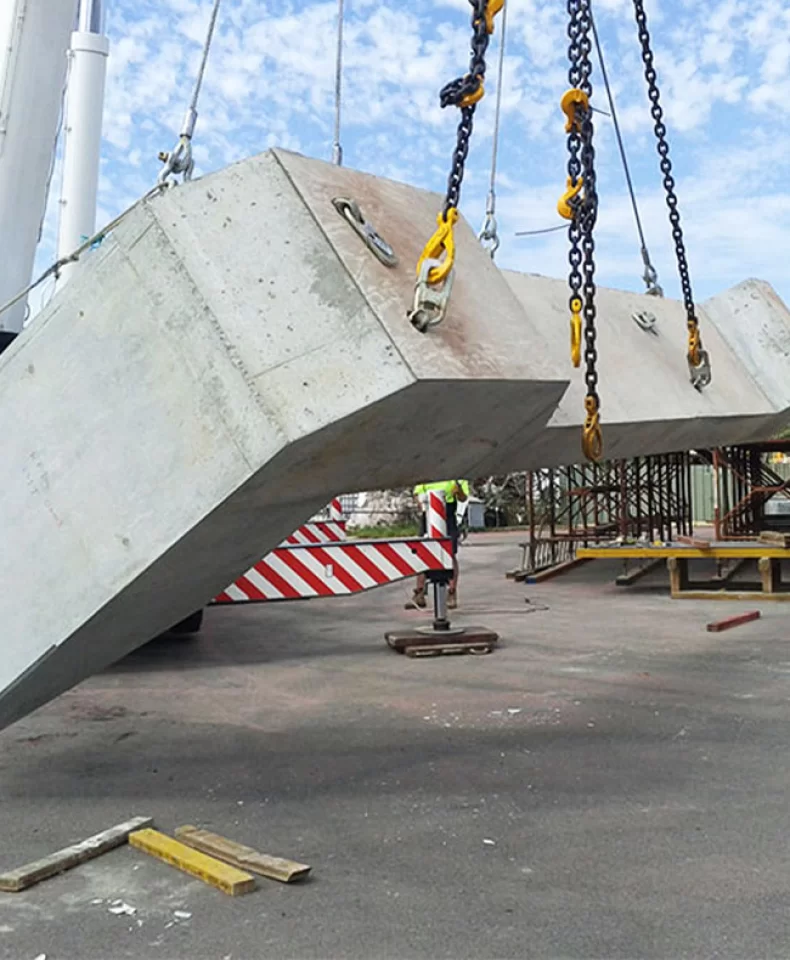
Installation should never be treated as an isolated workshop task. A safe lift depends on a continuous load path: from the crane hook and sling, through the lifting loop or swivel hoist ring, into the socket, through the embedded anchorage, and finally into the concrete. The weakest verified capacity in that path controls the operation. This article explains how to plan, install, inspect, and use a lifting socket as part of one engineered lifting system. Final procedures must always follow the manufacturer’s instructions, approved drawings, project specification, and the responsible engineer’s lifting design.
Understand the lifting socket system
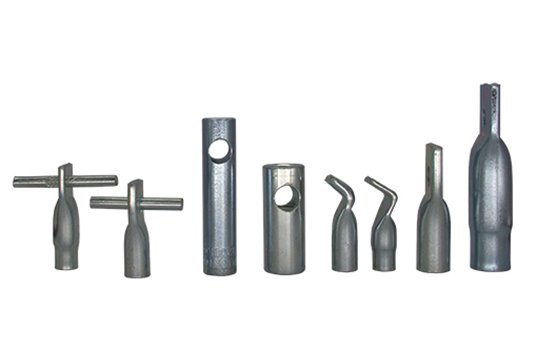
A cast-in lifting socket normally consists of a steel body with an internal thread, an external anchorage element, and a protective cap or plug. The socket establishes a connection at the concrete face while the anchorage transfers lifting forces into the surrounding concrete. The cap prevents cement paste and debris from entering the thread during casting.
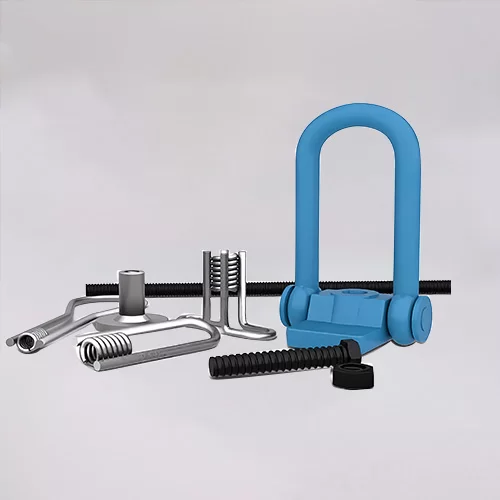
A lifting loop and a swivel hoist ring perform related but different functions. A lifting loop provides a rated loop for connection to a hook or shackle and usually has a threaded end or integral connector designed for a compatible socket. A swivel hoist ring provides a rated ring that can rotate or pivot to align with the lifting line. Swivel movement does not mean that the ring may be loaded at any angle or pulled sideways beyond its specified working range.
Three capacities should be distinguished. The first is the steel strength of the socket and connection. The second is the concrete anchorage capacity, which depends on the element geometry and concrete condition. The third is the rated capacity of the lifting loop or swivel ring at the actual lifting angle. The complete assembly should use components approved for one another, and the lowest verified capacity should govern.
Establish the engineering inputs
Socket selection begins with the precast element and its handling plan. Key inputs include element type, dimensions, mass, center of gravity, lifting orientation, number of lifting points, and the load expected at each point. The review should also cover demolding, turning, transport, storage, and erection, because these operations may produce different forces from the initial vertical lift.
The lifting angle is equally important. Sling geometry changes the force at each lifting point and may introduce horizontal components. The socket, loop, ring, shackle, and hook must have sufficient clearance to align naturally without contact with concrete edges. Where the element will be turned, the selected attachment must be suitable for that movement. A swivel ring may provide useful alignment, but its rotation does not override its rated load direction or working limits.
The concrete condition must be confirmed before installation. Relevant factors include concrete strength at lifting, member thickness, cover, embedment, edge distance, and nearby reinforcement. A socket that works in a thick wall panel may be unsuitable in a thin slab or near a free edge. The socket position should be checked against structural reinforcement, prestressing, cast-in channels, conduit, and other embedded items. If a conflict is found, the drawing should be revised and approved before casting; reinforcement should not be cut or bent without engineering authorization.
Select compatible components
The socket and lifting attachment should be selected from an approved combination. Compatibility includes thread diameter and pitch, thread engagement, shoulder or seating geometry, attachment orientation, and rated working load. A component should not be accepted merely because the thread starts easily by hand.
Product identification is essential. Check the socket model, mark, batch or traceability information, and documented capacity. The lifting loop or swivel hoist ring should also carry an identifiable rating and be free from damage, unauthorized repair, or visible deformation. Where a new combination is being introduced, a sample fit check with the actual socket and attachment is advisable before production begins.
The lifting accessory must be approved for the intended application. A fixing socket, even if it has a similar thread, should not be used for lifting unless it is specifically rated and designated for that purpose. Similarly, a swivel hoist ring intended for a particular load direction should not be treated as a universal lifting point. Any adapter, washer, or seating component should be included in the compatibility check.
Install the socket in the precast form
Installation starts with accurate setting out. The socket should be positioned and oriented according to the approved lifting and handling drawing. Its face should be set at the required level relative to the concrete surface, and the embedded anchorage should be fully contained within the element as designed.
The socket must be fixed securely to the formwork or supporting fixture. It should not be able to rotate, tilt, or move when reinforcement is installed or when concrete is placed and compacted. Use the manufacturer-approved fixing method. Confirm that the anchorage is not obstructed and that no reinforcement or other insert has been displaced to accommodate the socket.
The protective cap or plug should be correctly seated throughout preparation and casting. During concrete placement, vibration should be controlled so that the socket and anchorage remain in position. Concrete should not be directed into the open connection area. Immediately after casting, the position and protection of the socket should be checked. If the socket has moved or concrete has entered the thread, the nonconformance should be recorded and assessed before further work.
Confirm lift readiness and inspect the socket
Do not permit lifting solely because a nominal curing period has passed. The concrete must have reached the strength required by the lifting design. Verification should use the project-approved method, such as test results, maturity measurements, or another documented procedure.
Before demolding, confirm that the formwork and adjacent elements will not impose unintended restraint. Remove the protective cap carefully and inspect the socket. The internal thread or connector should be clean, dry where required, and free from concrete, release agent, corrosion, burrs, or mechanical damage. Clean it only with methods approved by the manufacturer. A damaged thread, displaced socket, broken anchorage, or cracked surrounding concrete should be referred to the responsible engineer before use.
Attach the lifting loop or swivel hoist ring
The selected attachment should be inspected immediately before installation. Confirm its identification, working load, condition, and suitability for the lifting angle. Check that the hook or shackle will bear only on the intended lifting point and cannot slip onto a non-rated section of the assembly.
When fitting a threaded lifting loop, engage the thread correctly and screw it into the socket to the required depth. Full engagement and correct seating are essential. If a small adjustment is needed to align the loop with the sling, it should be made only within the allowance stated by the manufacturer. The lifting loop should not contact the concrete edge or form a sharp bend around it.
For a swivel hoist ring, follow the specified seating and tightening procedure. Confirm that the ring rotates and pivots as intended and aligns with the planned lifting line. Check clearance through the full range of movement. Do not assume that a swiveling ring permits unrestricted side loading. The hook or shackle should be correctly positioned, and the ring should not be forced against the concrete or an adjacent fitting.
Control the lift
Before lifting, complete a pre-lift check of the socket, lifting loop or hoist ring, hooks, shackles, slings, and the lifting plan. Use an appropriate trial lift to confirm stability, load distribution, and clearance. Personnel should remain outside the exclusion zone while the load is suspended.
Raise and move the element smoothly. Avoid shock loading, sudden stops, swinging, and contact with formwork, supports, transport frames, or other elements. Monitor the alignment of the lifting equipment as the load is released from the casting bed. If the element behaves differently from the planned condition, lower it to a safe support and reassess the lifting arrangement instead of continuing.
Release, protect, and inspect for reuse
Lower and support the element before releasing lifting tension. Remove the lifting loop or swivel hoist ring according to the approved method. Do not drop, drag, or use the attachment for an unintended handling operation. Reinstall the socket cap where required to prevent contamination.
Reusable lifting equipment should be cleaned and inspected after use. Remove any component with missing identification, deformation, cracks, severe wear, damaged threads, or corrosion from service. Reuse and inspection intervals should follow the manufacturer’s instructions and the site’s lifting-equipment control procedure.
Avoid common installation errors
One common error is choosing components by thread appearance without confirming the approved assembly. Another is failing to achieve the required thread engagement or allowing concrete to enter the socket. Incorrect socket position, insufficient concrete strength at lifting, and side loading beyond the verified range are similarly serious. Other problems include connecting the hook to a non-rated part of a loop or ring, using a fixing socket for lifting, and returning damaged equipment to service. Each can remain invisible during a basic visual check and become apparent only under load.
Retain inspection and traceability records
The technical file should identify the socket type, batch or traceability reference, installation drawing, concrete-strength verification, pre-lift inspection, lifting equipment identification, and any approved deviation. Records should also show that reinforcement and other embedded items were coordinated with the socket location. This information supports quality control and makes later investigation possible if a component must be replaced or a lifting condition reviewed.
Why choose HULK Metal for lifting socket projects
HULK Metal approaches precast accessories from the element and lifting method rather than from a catalogue name alone. Public product information states that selection begins with element type, load per lifting point, concrete strength at stripping, embedment, edge distance, section thickness, and lift angle. That approach is relevant to lifting sockets, which cannot be selected independently of the lifting loop, swivel hoist ring, recess condition, and anchorage.
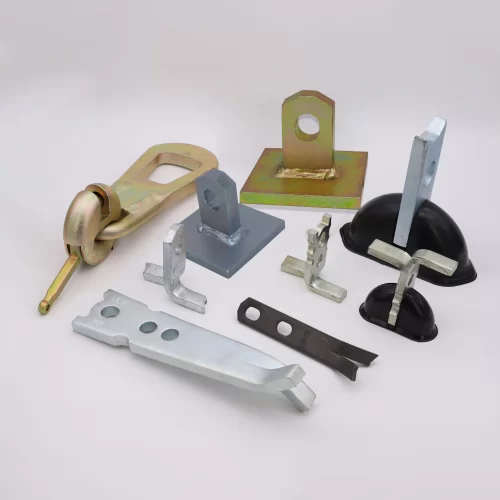
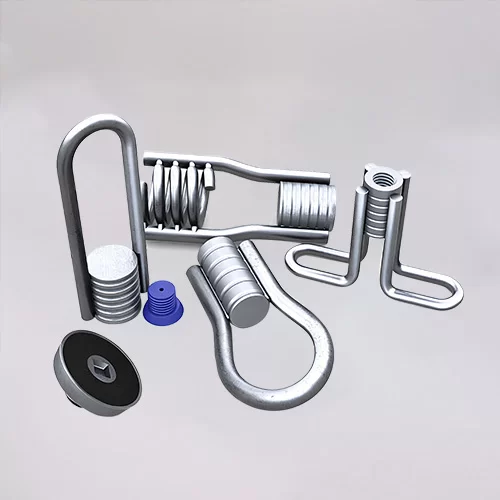
The range covers lifting anchors, lifting and fixing sockets, coil and ferrule inserts, spread anchors, lifting clutches, lifting hooks, recess formers, lifting loops, loop boxes, and related accessories. HULK Metal also states that hoist rings can serve as a supplementary threaded lifting point where an element must be turned. Existing anchors, sockets, thread specifications, recess dimensions, and lifting attachments can be reviewed before an order is placed.
For non-standard projects, HULK Metal offers OEM and made-to-drawing production, including special anchor lengths, non-standard recess sizes, proprietary magnet bodies, and parts matched to an existing mould system. Public information describes ISO 9001 order procedures and confirms CE status for the product families whose catalogues list it. The applicable certificate, test scope, batch record, inspection requirements, and third-party inspection arrangement should be confirmed for the specific product and order.
A useful enquiry should include the element drawing, component weight, number and position of lifting points, lift angle, concrete strength at lifting, section thickness, edge distance, and the intended lifting loop or swivel hoist ring. With these inputs, HULK Metal can discuss the appropriate accessory family, check the interface, and confirm whether a standard or drawing-based item is appropriate.
A lifting socket should be planned, installed, and used as one part of a verified lifting system. The socket, concrete anchorage, lifting loop or swivel hoist ring, hook, and sling all share the same load path. Design coordination, accurate formwork installation, thread protection, concrete-strength verification, compatible attachments, and disciplined inspection are therefore inseparable parts of safe handling.
The key requirement is not simply to find a socket that fits the thread. It is to confirm that the complete assembly suits the element, lifting geometry, concrete condition, and intended service. That check should be completed and documented before the first lift.
Article Navigation
PRECAST CONCRETE ACCESSORIES
Other Precast Concrete Accessories You Might Want to Know
You can click to learn more about HULK Metal precast concrete accessories such as lifting anchors, precast sockets, spread anchors, shuttering magnets, cast-in channels, wire loop boxes, and other precast concrete accessories you might want to know.