



How to Qualify a Coil Loop Insert Manufacturer for Precast and Forming Orders?
In precast concrete construction, reliable embedded connections are essential for securing components, supporting fixtures, and simplifying installation. Coil Loop Inserts provide a practical solution by combining an embedded steel coil with a looped anchoring structure, creating a threaded connection point within the concrete element.
Unlike conventional fixing methods that may require additional drilling or mechanical anchoring after curing, coil loop inserts are positioned before concrete casting and become an integral part of the precast component. Their threaded connection allows compatible bolts, rods, or other hardware to be installed when required.
For engineers, contractors, and precast manufacturers, selecting the right insert requires more than checking dimensions. Thread compatibility, concrete thickness, reinforcement layout, material, surface treatment, installation conditions, and manufacturing quality should all be considered.
What Are Coil Loop Inserts?
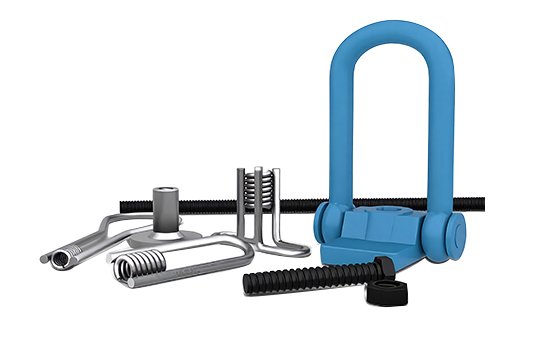
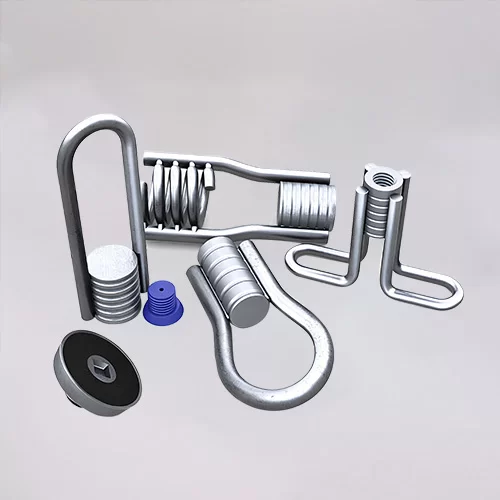
A coil loop insert is an embedded metal component designed to create a reliable threaded fixing point in concrete. It generally consists of a steel loop, a coil section, and an anchoring portion that becomes embedded in the concrete.
During production, the insert is positioned at a predetermined location inside the formwork before concrete is poured. Once the concrete cures, the coil provides a threaded connection point that can accept a compatible coil bolt, coil rod, or other threaded accessory.
How Do Coil Loop Inserts Work?
The basic installation process can be understood in five stages:
Positioning → Concrete Casting → Curing → Threaded Connection → Load Transfer
First, the insert is accurately positioned according to the engineering drawing. It is then secured before concrete placement to prevent movement or rotation. After casting and curing, the exposed threaded section can be accessed for connection with compatible hardware.
The embedded structure transfers forces from the connected component into the surrounding concrete. Actual load capacity depends on the insert design, concrete strength, embedment conditions, reinforcement arrangement, loading direction, and other project-specific factors.
Key Advantages
Coil loop inserts can provide several practical benefits for precast concrete production and installation:
Integrated fixing points without post-drilling
Fast installation of compatible threaded hardware
Flexible connection and component positioning
Options for different dimensions and thread specifications
Suitability for a wide range of precast concrete components
Potential for customized designs based on project requirements
Common Types of Coil Loop Inserts
Different precast applications may require different insert geometries. Choosing the appropriate configuration helps ensure that the insert fits the available space and works correctly with the surrounding concrete and reinforcement.
Straight Coil Loop Inserts
Straight coil loop inserts feature a relatively straightforward loop and coil configuration. They are suitable for applications where the available embedment space and connection requirements allow a conventional geometry.
They can be used in precast wall panels, beams, slabs, and other concrete components where a threaded embedded connection is required.
Flared Coil Loop Inserts
Flared coil loop inserts incorporate a flared anchoring geometry that changes the shape of the embedded portion. This configuration can be selected when the project requires a different anchoring arrangement or when the surrounding concrete geometry makes a conventional straight configuration less suitable.
The appropriate design should be determined according to concrete dimensions, reinforcement layout, load requirements, and the manufacturer's technical specifications.
Double Flared Coil Loop Inserts
Double flared coil loop inserts use a more developed anchoring geometry and can be considered for applications requiring a specific embedded configuration.
Their suitability should not be judged simply by appearance. Engineers should verify the complete dimensional design, concrete conditions, connection hardware, and applicable load requirements before selecting this type.
Custom Coil Loop Inserts
Standard products may not always match a project's requirements. Custom Coil Loop Inserts can be manufactured according to technical drawings or specified dimensions.
Common customization options include:
Coil dimensions
Wire diameter
Loop size
Overall length
Thread specification
Material grade
Surface treatment
Special geometric requirements
For custom orders, providing an accurate and current drawing helps the manufacturer confirm the design before production.
Applications of Coil Loop Inserts in Precast Concrete
Coil loop inserts are used across many precast and concrete construction applications where embedded threaded connection points are required.
Precast Wall Panels
In wall panels, coil inserts can provide fixing points for components, fixtures, temporary connections, or installation-related accessories. Correct positioning is particularly important because wall panels may have limited thickness and closely spaced reinforcement.
Beams, Columns, and Slabs
Precast beams, columns, and slabs can incorporate coil inserts during production to simplify later fixing operations. The insert location should be coordinated with reinforcement and the component's structural geometry before casting.
Thin Precast Elements
Thin concrete elements require careful consideration of embedment depth, edge distance, reinforcement arrangement, and available installation space.
The insert must be selected according to the actual dimensions of the concrete component rather than simply choosing a standard model based on thread size.
Bridge and Infrastructure Components
Coil inserts may also be incorporated into precast components used in bridges, transportation infrastructure, utility structures, and other construction projects. Material and surface treatment should be selected according to the expected environmental conditions and project requirements.
Formwork and Construction Fixtures
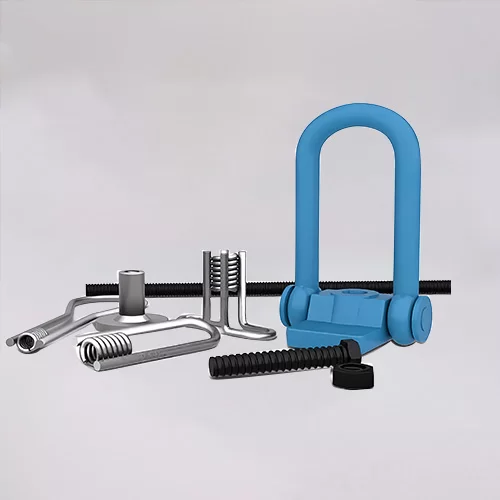
Compatible coil bolts, coil rods, and other threaded accessories can be used with embedded coil inserts for formwork and construction-related fixing applications. The mating components should always be checked for proper thread compatibility before installation.
How to Choose the Right Coil Loop Inserts
Selecting the correct insert requires coordination between the product specification and the actual concrete application.
Check the Concrete Element Dimensions
Start with the physical characteristics of the concrete component, including:
Concrete thickness
Component geometry
Edge distance
Required embedment depth
Reinforcement arrangement
An insert that fits the thread requirement may still be unsuitable if there is insufficient space for proper embedment.
Confirm Thread Compatibility
Thread compatibility is one of the most important considerations when purchasing coil inserts.
A matching nominal diameter does not always mean that two threaded components are compatible. The coil specification, thread dimensions, mating bolt or rod, engagement length, and manufacturing tolerances should be confirmed before production.
For custom projects, providing the exact mating hardware or technical drawing can help reduce compatibility problems.
Consider Load and Application Conditions
The intended application should be clearly identified before selecting the insert. Depending on the project, the connection may experience tension, shear, or combined loading.
Engineers should also distinguish between temporary and permanent connections and consider whether the connection will experience static or repeated loads.
The required insert specification should be determined according to the complete engineering design rather than based on a single load value.
Select the Appropriate Material
Common material options include carbon steel, alloy steel, and stainless steel.
Carbon steel can provide a practical solution for many general construction applications. Alloy steel may be considered when specific mechanical properties are required, while stainless steel is useful when enhanced corrosion resistance is important.
Material selection should balance mechanical requirements, environmental exposure, service conditions, and project cost.
Choose the Right Surface Treatment
Surface treatment can improve corrosion protection and adapt the insert to different environments.
Common options include:
Plain or black finish
Electro-galvanized
Hot-dip galvanized
Customized surface treatments
The choice should be based on environmental exposure and project specifications rather than using the same finish for every application.
Installation and Quality Control: What Should Be Checked?
Correct installation begins before concrete is poured.
First, the insert should be positioned according to the approved drawing, including its location, orientation, and embedment depth. It must then be securely fixed to prevent movement, rotation, or misalignment during concrete placement.
The internal coil thread should also be protected from concrete contamination. After demolding, the threaded area should be cleaned and inspected before installing mating hardware.
Reinforcement clearance is another important consideration. The insert should not interfere with reinforcing bars, and sufficient concrete should remain around the embedded section according to the engineering requirements.
Manufacturing quality control should cover several areas:
Raw Material Inspection: Verify the specified material and maintain appropriate material traceability.
Dimensional Inspection: Check coil diameter, wire diameter, loop dimensions, overall length, and other critical dimensions.
Weld Inspection: For welded designs, inspect weld position, appearance, consistency, and applicable testing requirements.
Thread Inspection: Confirm that the insert works correctly with the specified mating bolt or rod.
Surface Treatment Inspection: Check coating coverage, consistency, and visible surface defects.
A controlled inspection process helps maintain consistency between production batches and reduces problems during installation.
Why Choose HULK Metal for Coil Loop Inserts?
HULK Metal provides Coil Loop Inserts for customers requiring standard or customized embedded connection solutions for precast concrete applications.
Our production process can be organized around the customer's technical requirements, from engineering review and material preparation to forming, welding, surface treatment, inspection, packaging, and delivery.
For custom projects, our engineering team can review drawings, dimensions, thread specifications, materials, surface finishes, and order quantities before production. Quality control focuses on critical product characteristics such as dimensions, thread compatibility, weld condition, surface quality, and quantity.
This integrated approach helps customers manage product consistency and coordinate their precast concrete supply chain through one manufacturing partner.
Coil Loop Inserts provide a practical way to create embedded threaded connection points in precast concrete components. However, reliable performance depends on more than the insert itself. Correct design, thread compatibility, suitable materials, accurate installation, and controlled manufacturing quality all contribute to a dependable connection.
Whether you need standard products or custom coil loop inserts, providing complete technical requirements allows the manufacturer to develop a solution that fits your concrete element and application. If you are sourcing coil loop inserts for a precast concrete project, send HULK Metal your drawing, dimensions, thread requirements, material, surface treatment, and quantity for technical review and a suitable production solution.
Article Navigation
PRECAST CONCRETE ACCESSORIES
OTHER RELATED ARTICLE
Other Precast Concrete Accessories You Might Want to Know
You can click to learn more about HULK Metal precast concrete accessories such as lifting anchors, precast sockets, spread anchors, shuttering magnets, cast-in channels, wire loop boxes, and other precast concrete accessories you might want to know.