



Ferrule Inserts: The Complete Technical Guide for Concrete Anchoring Applications
In structural and infrastructure construction, the choice of anchoring system directly affects the safety, durability, and cost-efficiency of a project. Among the many concrete anchoring solutions available, ferrule inserts remain one of the most versatile and widely specified components for creating reliable threaded anchor points in concrete.
This guide provides a comprehensive technical overview of ferrule inserts—from engineering principles and material selection to installation practices and code compliance. Whether you are a structural engineer, contractor, or procurement specialist, this article will help you make informed decisions when specifying ferrule inserts for your next project.
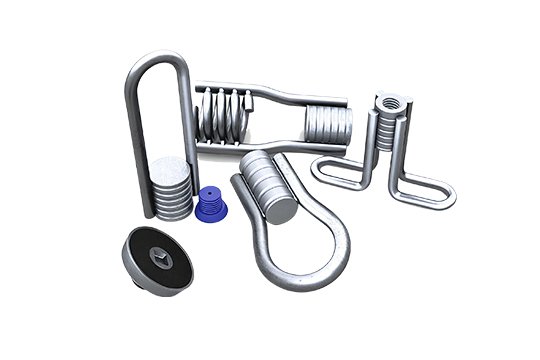
What Are Ferrule Inserts and How Do They Work?
A ferrule insert is a cylindrical anchoring component, typically featuring internal threading, designed to be embedded into concrete to create a permanent, reusable threaded connection point. The insert is set into a pre-drilled hole using a setting tool that expands the base, locking the insert into the concrete through mechanical interlock.
Unlike wedge or sleeve anchors, which rely on a single expansion mechanism, ferrule inserts use a controlled expansion system that distributes load evenly along the embedded length. This results in higher tensile and shear performance, particularly in applications requiring precise torque control or repeated use.
The key components of a ferrule insert system include an external body with expansion slots, an internal thread for bolt engagement, a setting expansion plug that activates during installation, and optional head configurations such as hex or knotted type. When compared to alternative anchors, ferrule inserts offer distinct advantages: they can be specified for shallow embedments, they provide flush finishes, and they can be removed and replaced without compromising the surrounding concrete—making them ideal for temporary works or equipment mounting.
Main Types of Ferrule Inserts
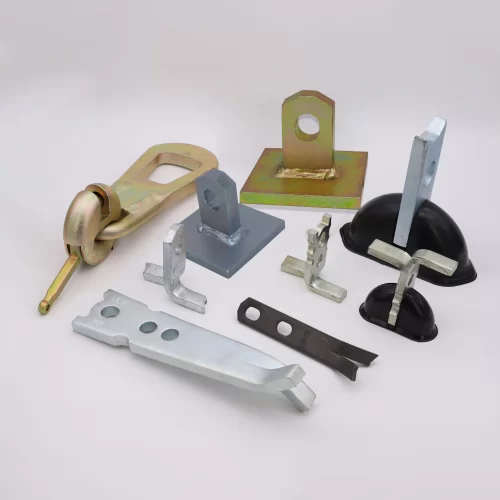
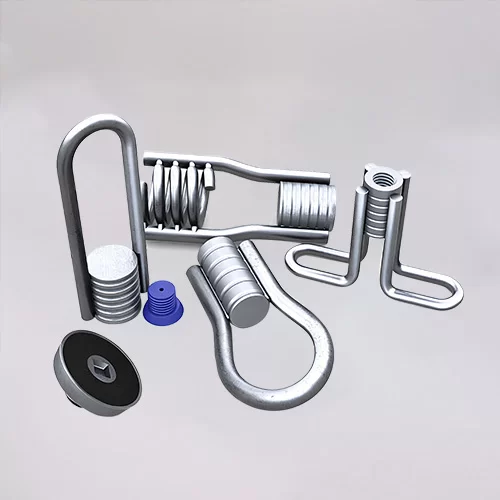
The HULK Metal product line covers a comprehensive range of ferrule inserts engineered for diverse precast concrete applications. According to the manufacturer catalog, the series can be grouped into six primary types:
Flared Loop Ferrule Insert (HM-FI21)
Fabricated by welding a looped strut to a closed-end ferrule, this versatile insert is commonly used to make structural connections and to suspend pipes and other mechanical equipment. Available in 3/8", 1/2", 5/8", 3/4", 7/8", and 1" UNC thread sizes.
Straight Loop Ferrule Insert (HM-FI22)
Typically used to attach precast wall panels to a building frame and to provide attachment for other structural elements. Available in 1/2", 5/8", 3/4", and 1" sizes.
Thin Slab Ferrule Insert (HM-FI23)
Specifically designed for applications where embedment depth is limited and lower tension capacity is acceptable. Available in 1/4", 1/2", 5/8", and 3/4" diameters.
Expanded Coil Ferrule Insert (HM-FI24 / FI-25 / FI-26)
A high-strength, highly versatile series constructed with an NC threaded ferrule, shaped struts (2, 4, or 6 depending on model), and an expanded wire coil. This efficient design increases the shear cone surface area, significantly boosting load capacity. Bolt diameters range from 3/4" to 1-1/2", with safe working loads up to 18,680 lbs in tension.
Flared Wing Ferrule Insert (HM-FI41)
Fabricated for precast concrete wing walls and culvert connections, supporting concrete footings that project laterally into back-filled soil. Available in 1/2", 3/4", and 1" bolt diameters.
Wing Wall Anchor (HM-FI61)
A purpose-built anchor supporting concrete footings projecting laterally from a wing wall; supplied with 6" or 8" insert spacing and 1" UNC thread.
As a complementary installation tool, Magnetic Ferrule Insert Locators (HM-MFIL series) allow UNC threaded inserts to be mounted directly to steel forms without drilling—available in diameters from 1/4" to 1-1/4". All inserts are surface-treated galvanized as standard, with safe working loads calculated at a 3:1 safety factor based on 3,000 psi concrete and 145 pcf concrete density.
Industry Applications of Ferrule Inserts
Ferrule inserts serve as critical anchoring points in numerous construction and industrial applications. They are commonly used in structural steel column bases to secure base plates and anchor bolts in steel-framed buildings. In precast concrete connections, ferrule inserts allow for the bolted assembly of precast elements, simplifying on-site installation. For mechanical and electrical (M&E) installations, they provide reliable mounting points for conduit, cable trays, HVAC equipment, and pipe supports.
In bridge and infrastructure projects, ferrule inserts are used in parapet rails, expansion joints, and utility mounting. For industrial equipment mounting, they anchor machinery, conveyor systems, and material handling equipment to concrete floors and foundations.
The ability to specify repeatable, removable connections makes ferrule inserts particularly valuable in applications where equipment must be serviced, replaced, or relocated over the service life of a structure.
Ferrule Insert Installation: Step-by-Step Guide
Correct installation is essential to achieving rated load performance. The following procedure applies to most standard ferrule insert installations.
1. Drill the Hole — Use a hammer drill with a carbide-tipped bit matching the insert diameter. Drill to the specified depth, keeping the hole perpendicular to the concrete surface.
2. Clean the Hole — Remove dust and debris using compressed air and a wire brush. A clean hole ensures proper mechanical interlock.
3. Insert the Ferrule — Place the ferrule insert into the hole, ensuring it sits flush with the concrete surface.
4. Set the Insert — Using the appropriate setting tool, drive the expansion plug to activate the mechanical interlock between the insert and the concrete.
5. Verify Installation — Check that the insert is firmly set and does not rotate within the hole.
6. Curing Time — Although ferrule inserts achieve immediate holding capacity, full rated performance develops once the surrounding concrete reaches design strength.
Common installation errors include under-drilling the hole depth, failing to clean the hole properly, using incorrect setting tools, and over-torquing the bolt during attachment.
Load Capacity, Testing, and Code Compliance
Understanding load ratings is fundamental to safe specification. Ferrule insert performance is typically expressed in terms of tensile (pull-out) capacity, which measures resistance to axial forces, and shear capacity, which measures resistance to perpendicular forces. Load ratings are based on a minimum concrete compressive strength—typically 25 to 40 MPa—with higher-strength concrete improving overall performance.
Industry standards governing ferrule insert performance include ASTM E488 for strength testing of anchors in concrete, ACI 318 for structural concrete requirements, and ICC-ES AC01 acceptance criteria for expansion anchors. For critical applications, on-site pull-out testing should be conducted to verify actual capacity under site-specific conditions.
How to Select the Right Ferrule Insert
Selecting the correct ferrule insert requires evaluating several project-specific factors. Start with load requirements by calculating both static and dynamic loads and applying appropriate safety factors. Match sizing—thread diameter and length—to the bolt specification and connection design. Evaluate environmental conditions to choose the appropriate material and coating. Verify embedment depth against the slab or structural element thickness. Finally, for large infrastructure projects, confirm quantity and lead time with the manufacturer to ensure supply continuity.
Working with an experienced ferrule insert supplier ensures that the selected product meets all applicable code requirements and project specifications.
Ferrule inserts provide a reliable, versatile, and code-compliant anchoring solution for a wide range of concrete construction applications. By understanding the engineering principles, material options, installation requirements, and selection criteria outlined in this guide, specifiers and contractors can confidently choose the right ferrule insert for any structural or industrial need. For project-specific recommendations, technical specifications, or bulk procurement inquiries, contact a qualified ferrule insert manufacturer or authorized distributor.
Article Navigation
PRECAST CONCRETE ACCESSORIES
OTHER RELATED ARTICLE
Other Precast Concrete Accessories You Might Want to Know
You can click to learn more about HULK Metal precast concrete accessories such as lifting anchors, precast sockets, spread anchors, shuttering magnets, cast-in channels, wire loop boxes, and other precast concrete accessories you might want to know.