



Inside a Lifting Anchor Manufacturer: How Quality Is Built Into Every Batch
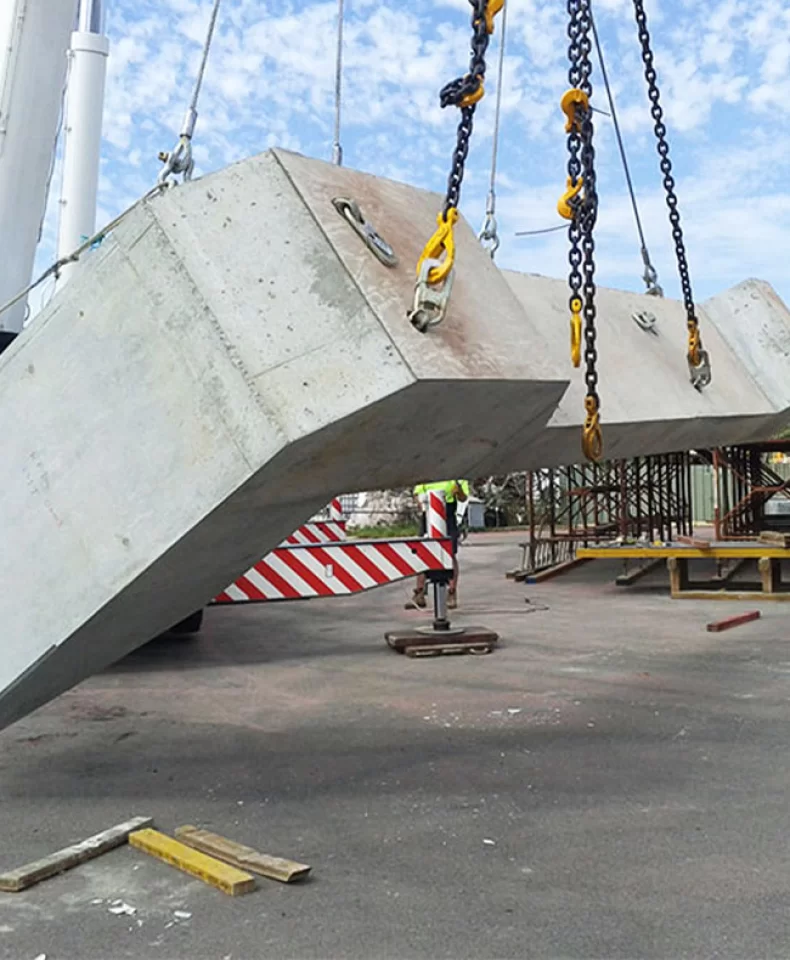
In precast concrete construction, the lifting anchor is the single component standing between a finished element and a catastrophic drop. Every wall panel, beam, and double tee must be lifted, rotated, transported, and set into position—and each of those maneuvers concentrates the full weight of the element, plus dynamic forces, into a small piece of steel embedded in fresh concrete.
In our facility, quality is not something we check for at the end of the line—it is something we build into every stage, in every batch, every day.
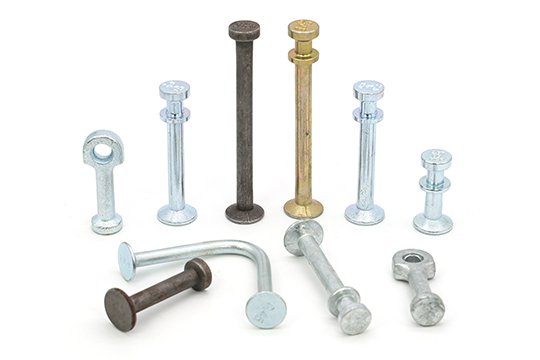
Foundational Quality: Raw Material Selection and Control
Certified Sourcing and Full Traceability
Quality begins before the first forging stroke. We purchase steel only from certified suppliers who provide full chemical and mechanical documentation for every heat lot. Each incoming bundle receives a unique lot tag that follows it through the factory, so the origin of any anchor can be identified at any point in its life.
Chemistry That Governs Performance
Composition matters more than most buyers realize. Carbon content governs strength and weldability, manganese improves toughness, while excess sulfur and phosphorus degrade ductility precisely where lifting performance depends on it. This is why we verify chemistry ourselves rather than trusting paperwork alone.
Incoming Inspection and Rejection
Every incoming lot is verified by spectrometry before it touches our storage racks, with hardness sampling run in parallel. If a heat lot falls outside our internal specification—stricter than what the mill certificate alone would guarantee—the steel is quarantined and returned. No exception is made for schedule pressure, because a defect at this stage cannot be repaired downstream.
Engineering the Design: Building Beyond the Minimum
Compliance as the Floor, Not the Target
Our design philosophy treats compliance as the starting point rather than the goal. Design margins are established in-house above the minimum requirements, so that normal manufacturing variation never erodes the stated working load limit.
Stress Analysis Under Real Load Cases
Every lifting anchor geometry we manufacture is validated through computer-based stress analysis, modeling how the component behaves under axial loads, shear, combined loading, and eccentric pulls that mirror real jobsite handling. Geometry is tailored to these load cases before a single prototype is cut.
Prototype Testing Before Production
Before any new design reaches the production floor, it undergoes a full prototype testing program in our test lab—repeatedly loaded past its rated capacity under controlled conditions until we understand exactly where and how it yields. A design earns its place in our catalog only after it survives this gauntlet.
Forging and Machining: Where Geometry Meets Metallurgy
Process Selection Based on Grain Structure
We select hot forging or cold forming for each product family based on the effect on grain structure. Properly forged steel develops continuous grain flow that follows the lifting anchor's contours, delivering toughness that cut bar stock simply cannot match.
Precision Machining of Critical Surfaces
Threads and bearing surfaces are precision-machined within tight tolerance bands, because thread engagement and head seating directly determine how load transfers into the concrete. Every dimension that affects load transfer is treated as a critical characteristic.
In-Process Monitoring and Tooling Lifecycle
Critical dimensions are monitored with statistical process control, so drift is detected from measurement trends long before any individual part approaches its limit. Dies and cutting tools are retired on a managed lifecycle schedule rather than run to failure—tooling that stays in service too long quietly degrades the product, and we refuse to let that happen.
Surface Treatment and Corrosion Protection
Matching Protection to the Service Environment
Anchors often wait months in yard conditions before use, so corrosion protection is engineered, not improvised. We match the protection system to the environment: hot-dip galvanizing for general exposure, phosphating where anchors will contact pour-in concrete, and specialized coatings for aggressive marine or industrial environments.
Controlling Hydrogen Embrittlement Risk
For plated high-strength steel, we actively manage the hydrogen embrittlement risk through controlled baking processes, since hydrogen absorbed during plating can cause delayed brittle fracture under load.
Batch-Level Coating Verification
Surface preparation is controlled as strictly as the coating itself, and coating thickness is verified by non-destructive measurement on every batch, ensuring protection will actually last through transport, storage, and embedment.
The Heart of the Matter: Batch-Level Testing Protocols
Proof Load Testing on Every Batch
Every production batch is subject to a defined sampling plan before it can be released. Samples are pulled for proof load testing, held at elevated loads to verify performance with calibrated load cells recording every result.
Destructive Ultimate Load Testing
On a destructive sampling basis, we test anchors to ultimate failure—because the only way to know the real safety margin of a batch is to break a representative sample of it. Our test rigs reproduce genuine handling scenarios, including pure shear and combined loading. If any sample underperforms, the entire batch is held and investigated.
Certification and the Unbroken Traceability Chain
Test results are compiled into a batch test certificate that accompanies every shipment, so the customer holds documented evidence—not a promise—of what the lifting anchors can withstand. Underpinning it all is an unbroken traceability chain: from heat number to forging lot to test sample to the shipped crate. If a question ever arises in the field, we can reconstruct the complete history of any anchor we have made.
The Human Layer: Operator Training and Quality Culture
Certified Training and Requalification
Machines hold tolerances, but people hold the standard. Our forging operators and QC inspectors complete certified training before they take responsibility on the line, with recurring requalification to keep skills sharp.
Quality at the Source
Any line worker has both the authority and the obligation to stop production when something looks wrong. This principle means problems are caught at the workstation where they occur, not three processes later.
Audits and Management Review
Internal audits run on a fixed cadence, and non-conformance trends are reviewed by management—not to assign blame, but to direct resources. In our experience, culture is what prevents the next failure; procedure merely documents the last one.
Continuous Improvement: Closing the Loop
Non-Conformance as Data, Not Blame
A non-conformance report is treated as data, not an indictment. Every manufacturing deviation triggers structured root cause analysis that reaches the true underlying cause instead of patching symptoms.
Feedback Into Design and Process
Findings feed back into design refinement and process changes, creating a closed loop between what we learn and how we build. Feedback from field performance—installations, handling incidents, customer observations—flows into the same loop.
An Audited Way of Operating
As an ISO 9001 certified manufacturer, this systematic approach to quality management is not an aspiration but an audited, continuously verified way of operating, reinforced by ongoing investment in test equipment and process automation to tighten capability year after year.
Every lifting anchor installed in the field represents a batch that was traced from its steel chemistry, forged under controlled process, tested to destruction at its margin, and certified in writing before it left our dock. Our CE certified products carry that same discipline into the European market, and our accountability does not end at the loading dock.
Quality in lifting hardware is not a milestone reached once; it is a discipline renewed with every heat of steel, every production run, and every test certificate issued. In lifting, there is no "good enough." There is only proven or unproven—and we intend for every anchor we ship to be the former.
Article Navigation
PRECAST CONCRETE ACCESSORIES
OTHER RELATED ARTICLE
Other Precast Concrete Accessories You Might Want to Know
You can click to learn more about HULK Metal precast concrete accessories such as lifting anchors, precast sockets, spread anchors, shuttering magnets, cast-in channels, wire loop boxes, and other precast concrete accessories you might want to know.