



Precast Panel Lifting Clutches: Selection Guide
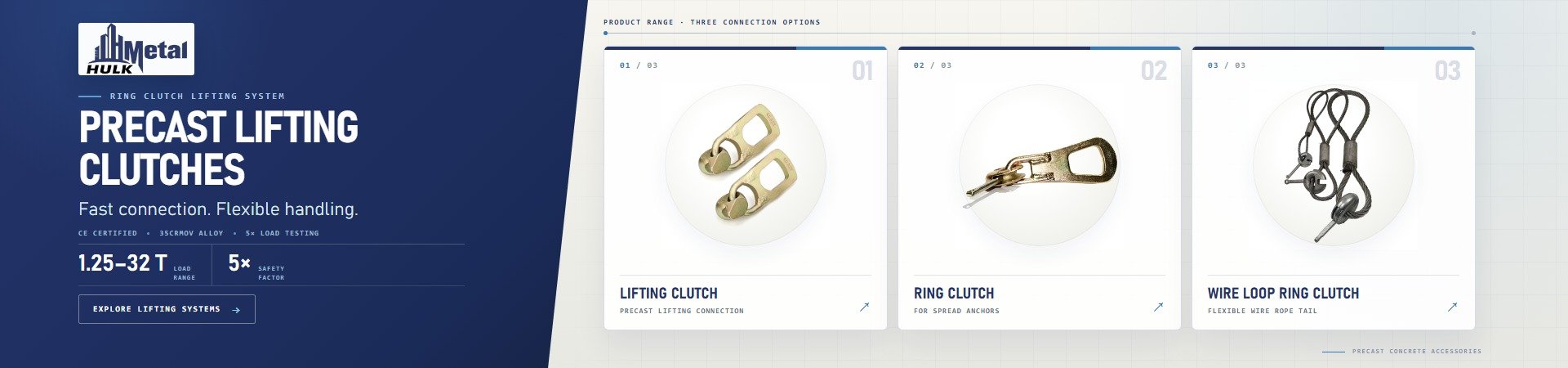
In precast concrete construction, the lifting clutch is the critical link between the crane and the embedded anchor cast into the panel. Every stage of a panel's life — demolding, transport, turning and installation — depends on this connection performing as designed. When the clutch is correctly matched to the anchor system and the lifting configuration, handling is smooth and predictable; when it is not, the consequences range from lifting delays and damaged panels to sudden connection failure with the panel suspended in the air.
Incorrect selection is rarely a dramatic error. More often it is a quiet mismatch: a clutch that fits the anchor head loosely, a capacity that ignores sling angles, or a locking mechanism never designed for the required lifting direction. This guide explains how to select precast panel lifting clutches as part of a complete engineered system — considering anchor compatibility, rated capacity, panel geometry, lifting configuration and product quality — rather than as an isolated accessory.
Understanding Precast Panel Lifting Clutches
How Lifting Clutches Work in Precast Construction
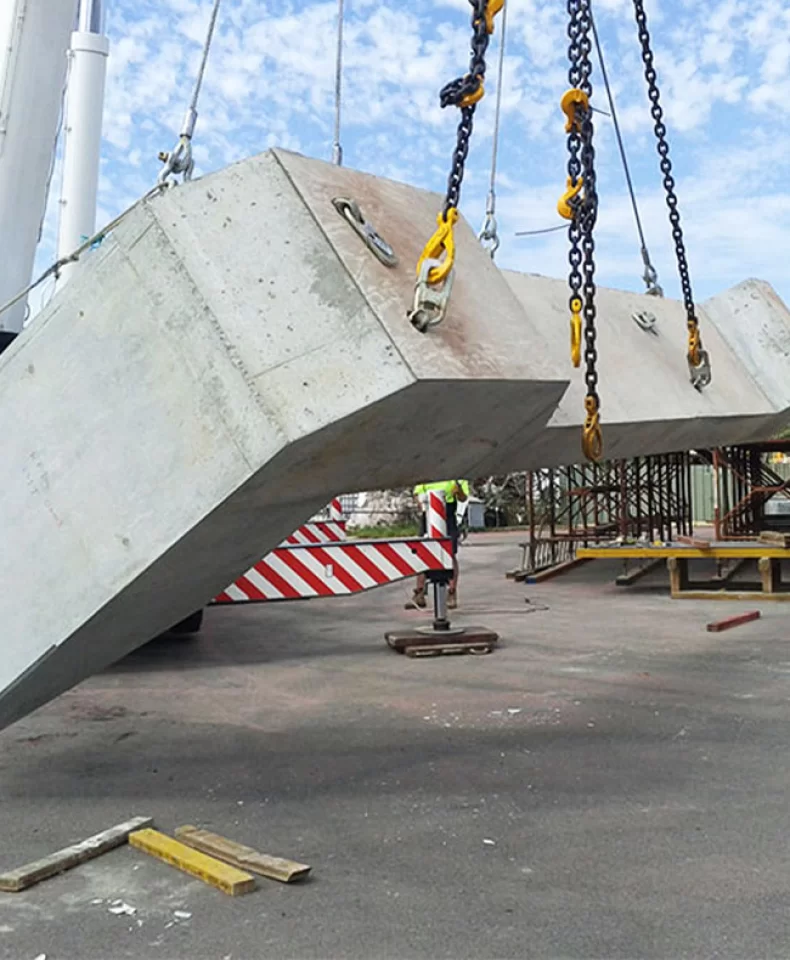
A lifting clutch engages with a compatible embedded anchor positioned in a recess formed during casting. The clutch head enters the recess, locks onto the anchor head or ball, and transfers load along a defined path: from the crane or sling, through the clutch bail and body, into the anchor, and into the concrete element itself.
Two conditions must be met before any load is applied. First, the clutch must be fully engaged with the anchor — partial engagement may hold under light load and release under dynamic loading. Second, the locking mechanism must be confirmed locked per the manufacturer's instructions. Disciplined crews treat this as a fixed step in every lift.
Main Components and Functional Requirements
Although designs vary between systems, a precast lifting clutch generally consists of:
- Clutch head and engagement mechanism — captures the anchor head and must match its geometry precisely.
- Locking bolt or locking device — secures the clutch against the anchor during handling.
- Bail or shackle — the connection point for slings or lifting beams.
- Load-bearing body components — parts whose strength and dimensional accuracy determine working performance.
Each component has a functional requirement, not just a dimensional one. The engagement mechanism must tolerate field conditions — slurry, debris, repeated insertion cycles — while still locking positively, and the load-bearing parts must combine high strength with wear resistance, because a clutch is re-used hundreds of times in service.
Lifting Clutch vs. Ring Clutch
Conventional lifting clutches and ring clutches look similar but belong to different systems. A ring clutch is designed for flat lifting anchors — typically thin anchors used in thinner panels and applications requiring specific lifting or turning movements — while a conventional clutch suits pin-type or spherical-head anchors. Engagement geometry, locking method and permitted lifting direction all differ. The practical implication is simple: visual similarity does not establish interchangeability, and compatibility must be confirmed through the manufacturer's documentation, never through appearance alone.
Common Types of Lifting Clutches for Precast Panels
Pin Anchor Lifting Clutches
Designed for pin or spherical-head anchor systems — among the most widely used for wall panels, slabs and beams — these clutches should be selected by three criteria: the anchor head geometry, the load group (clutch and anchor must belong to the same load group), and the locking mechanism.
Ring Clutches for Flat Lifting Systems
Ring clutches work with flat lifting anchors as a matched system that includes the corresponding recess former. They are particularly relevant to thin panels, where standard pin anchors may not fit the cross-section. Key considerations are the anchor design, recess geometry and the permitted lifting direction.
Specialized Clutches for Directional Lifting
Some systems offer specialized designs for edge lifting, tilting or controlled rotation. These solve real handling problems but reinforce the central rule: a clutch designed for one system's anchor should never be assumed to work with another's. Confirm compatibility through the manufacturer.
Key Factors When Selecting Precast Panel Lifting Clutches
Match the Clutch to the Anchor System
Verify the anchor type, head dimensions, engagement geometry and locking method against the clutch manufacturer's specifications, and confirm that the clutch, anchor and recess former belong to one coherent system. Before purchasing, review the technical drawings of both products and check engagement dimensions directly. If your project combines anchors from one manufacturer with clutches from another, obtain documented approval first.
Determine the Required Load Capacity
Capacity selection starts with the panel's actual weight — not the nominal weight, but the real weight including embedded inserts, toppings and demolding adhesion. From there, consider the lifting arrangement: number and positions of lifting points, sling angles and load distribution.
This is where many selection errors occur. With inclined slings, the tension in each leg exceeds the vertical share of the load, and uneven distribution means one lifting point may carry substantially more than panel weight divided by the number of anchors. Dynamic effects during lifting and rotation add further load. Calculate the maximum load at each lifting point under the governing condition, then select a clutch whose rated capacity covers that point load with the system's designated safety margin.
Consider Panel Geometry and Lifting Configuration
Panel thickness, dimensions, center of gravity and lifting-point positions together determine what the clutch must do. A panel lifted flat off the casting bed, turned on edge and stood vertically places very different demands on the connection at each stage. Confirm whether the panel requires vertical lifting, tilting, turning or edge lifting, and that the clutch allows the movement required by the approved lifting arrangement.
Check Concrete Strength and Embedded Anchor Conditions
The clutch-anchor connection is only as strong as the concrete around the anchor. Verify that the concrete has achieved the specified strength before lifting — especially critical for early demolding at partial strength. Confirm anchor embedment, reinforcement and edge distances against the approved design, since anchors closer to a free edge than designed can fail at loads well below the system rating. Inspect lifting points and surrounding concrete for cracking, spalling or slurry-filled recesses that could prevent full engagement.
Evaluate Material Quality and Manufacturing Consistency
A lifting clutch is a reused, wear-exposed safety component, so manufacturing quality matters as much as design. Review material specifications and mechanical properties — forged high-strength alloy steel with controlled heat treatment is the baseline expectation for load-bearing parts. Check inspection records, traceability and applicable certification, evaluate the locking mechanism's reliability and wear resistance, and request technical documentation and testing evidence appropriate to the application. A supplier who cannot produce this documentation should not be producing lifting hardware.
Precast Panel Lifting Clutch Selection Checklist
The following table summarizes the key verification points for buyers, engineers and site supervisors:
Selection Factor
What to Verify
Why It Matters
Anchor compatibility
Anchor type, head geometry and model
Ensures secure engagement
Rated capacity
Clutch rating and calculated point load
Prevents capacity mismatch
Lifting configuration
Sling angles and lifting direction
Helps control actual loading
Panel geometry
Thickness, weight and lifting-point locations
Supports a suitable lifting arrangement
Concrete condition
Specified concrete strength and visible condition
Reduces lifting-related risks
Product quality
Inspection records and relevant certifications
Supports quality verification
Maintenance condition
Wear, cracks, deformation and locking function
Helps identify unsafe equipment
Use this checklist twice: before purchase, to confirm the product matches the application, and before each lifting campaign, to confirm the equipment remains fit for service.
How to Inspect and Use Lifting Clutches Safely
Pre-Lifting Inspection
Before every use, inspect the clutch body, bail, locking components and engagement surfaces for cracks, deformation, excessive wear, corrosion or damaged locking mechanisms. Verify that the anchor and recess are free from debris or slurry that could prevent full engagement.
Correct Connection and Lifting Procedure
Engage the clutch according to the manufacturer's instructions and confirm the locking mechanism is fully engaged. Connect the approved lifting equipment and apply a controlled initial load to verify seating. Lift smoothly — no shock loading, dragging or side loading — and keep personnel clear of suspended loads.
Post-Use Inspection and Maintenance
Clean and inspect the clutch after use and record its condition. Any clutch showing cracks, deformation or locking malfunction must be removed from service immediately and evaluated or replaced according to manufacturer requirements. Maintain inspection records and follow the specified inspection intervals.
Common Mistakes to Avoid When Purchasing Lifting Clutches
Selecting by Rated Capacity Alone
A clutch with sufficient rated capacity is not automatically a suitable clutch. Capacity says nothing about whether the clutch will engage the embedded anchor securely or permit the required lifting movement. Verify compatibility and capacity — in that order.
Mixing Components from Different Lifting Systems
Combining a clutch from one manufacturer with anchors from another, without documented approval, creates an unverified connection. Engagement geometry and load transfer were engineered as a system; mixing components forfeits that engineering and transfers the risk to the job site.
Ignoring Sling Angles and Uneven Load Distribution
The load on an individual lifting point is frequently much higher than panel weight divided by the number of anchors. Inclined slings increase leg tension, and panels rarely distribute weight evenly. Decisions based on total weight alone systematically undersize the equipment.
Overlooking Inspection and Traceability
Ordering without technical documentation, or using equipment without inspection records, removes the ability to verify what is on the hook. Insist on material certificates, inspection records and product marking — and treat a damaged clutch as scrap, not a negotiable asset.
Failing to Plan for Panel Turning and Installation
Many clutches are selected for the initial vertical lift and never evaluated against the full sequence. If the panel must be turned, tilted or edge-lifted during installation, the clutch must suit those movements too. Review the complete lifting sequence before purchase.
Why Choose HULK Metal for Precast Panel Lifting Clutches?
- Product Compatibility Support. We help customers verify clutch models against their existing anchor systems and technical drawings before ordering.
- Quality Assurance. Dimensional inspection, mechanical testing and quality documentation are applied where applicable to the product.
- Customized Supply. Project-specific specifications, quantities and packaging are supported, from single specials to full project volumes.
- Supply Chain Coordination. Production, inspection, packaging and logistics are coordinated as one process.
- After-Sales Support. Assistance with quality issues and quantity discrepancies follows agreed service terms.
To move from selection to order, send your panel weights, anchor system models, lifting method, required quantities and relevant drawings — HULK Metal will verify the selection with you and prepare a quotation.
Selecting a precast panel lifting clutch is a systems decision, not a catalog decision. Anchor compatibility comes first; load capacity must be based on calculated point loads rather than total panel weight; the lifting configuration must be supported by the clutch design; and the product must carry the material quality and traceability that a reused safety component demands.
Safe lifting depends on the complete engineered system — anchor, concrete, clutch, slings and procedure working together. Before placing an order, confirm your requirements against the checklist above, and work with a supplier who will verify every unclear point with you.
Article Navigation
PRECAST CONCRETE ACCESSORIES
OTHER RELATED ARTICLE
Other Precast Concrete Accessories You Might Want to Know
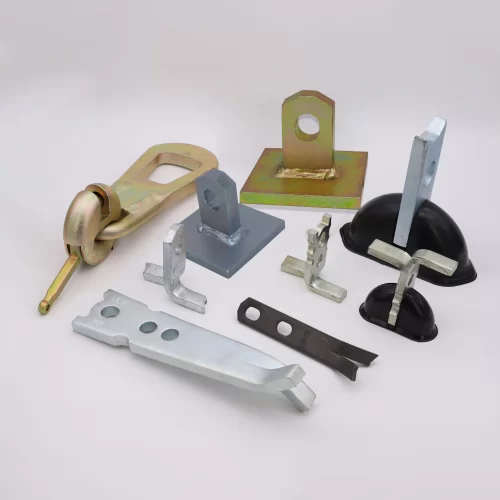
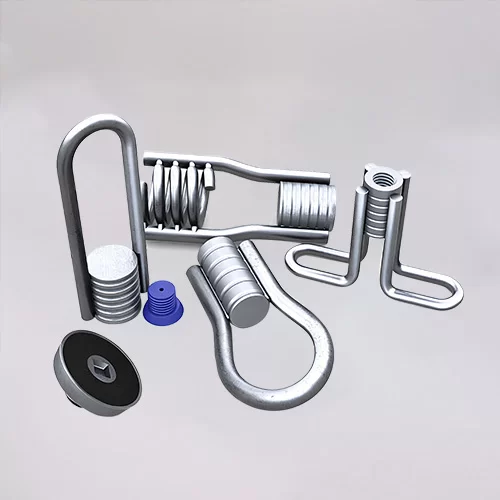
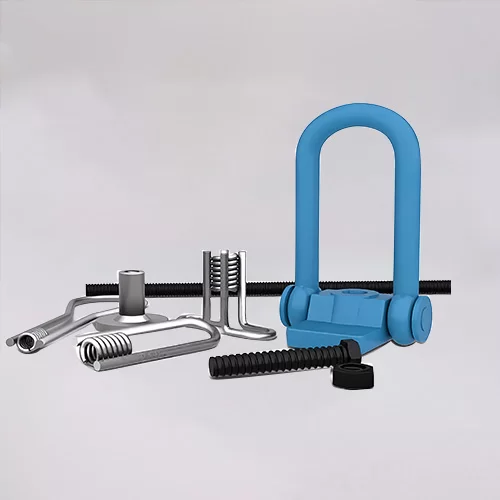
You can click to learn more about HULK Metal precast concrete accessories such as lifting anchors, precast sockets, spread anchors, shuttering magnets, cast-in channels, wire loop boxes, and other precast concrete accessories you might want to know.