



Cast-In Channels for Precast Concrete: A Complete Guide
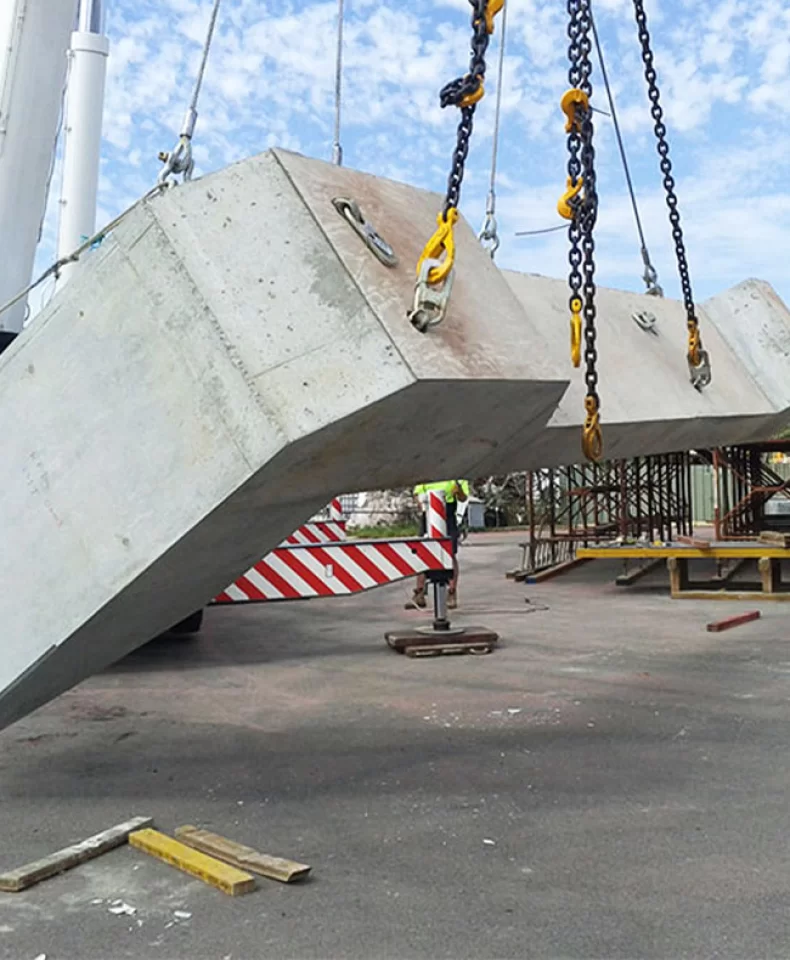
Precast concrete has become a mainstream construction method because it moves work off the site and into a controlled factory environment. Wall panels, concrete elements, beams, columns and staircase units arrive on site ready to be craned into position, which shortens programmes and reduces weather-related risk. But this speed only pays off if the connections are right. Every bracket, support, MEP hanger and structural hardware item needs a fixing point that is accurate, strong and repeatable.
Cast-in channels for precast concrete solve this problem at the design stage. A cast-in channel — also called an anchor channel or cast-in anchor channel — is embedded in the concrete element while it is being cast, creating a continuous fixing line instead of a single fixed point. Once the concrete has cured, compatible channel bolts or channel nuts can be engaged anywhere along the slot, giving installers positional flexibility and removing much of the drilling that would otherwise be required on site.
What determines whether this works well is not the channel alone. Connection safety, installation efficiency and long-term performance all depend on the complete system: channel profile, anchors, fasteners, concrete strength, edge distance, reinforcement layout and the installation method used in the factory. This guide covers each of those factors.
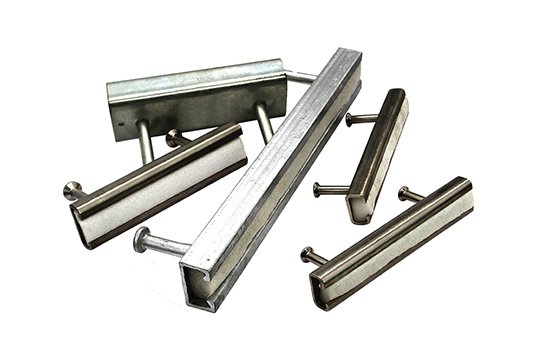
What Are Cast-In Channels for Precast Concrete?
Definition and Basic Structure
A cast-in channel is a steel channel section with anchors attached, cast into concrete so that its open slot remains flush with the concrete surface. It forms the load-transferring interface between the concrete element and whatever is fixed to it.
The main components are:
Steel channel body — the profiled section, hot-rolled or cold-formed, that receives the fastener.
Anchors or welded anchor studs — transfer load from the channel into the surrounding concrete.
Channel opening and fastening interface — the slot geometry and lip profile that engage with the channel bolt or nut.
Filler or protective strip — a removable material that keeps concrete slurry out of the slot during casting.
How Do Cast-In Channels Work?
The channel is fixed to the formwork or reinforcement cage before concrete is placed, positioned according to the approved drawings. After casting and curing, the filler is removed and a compatible T-bolt or channel nut is inserted into the slot and rotated or tightened to engage the channel lips.
Load then travels from the connected bracket through the bolt, into the channel lips and body, and finally through the anchors into the concrete. Capacity is a property of the whole assembly — channel profile, anchor configuration, concrete grade and condition, edge distance and reinforcement all influence the result — so it must always be verified against manufacturer documentation and applicable design standards rather than assumed.
Main Types of Cast-In Channels
Hot-Rolled Cast-In Channels
Hot-rolled profiles are produced from heated steel and typically offer greater section thickness and robust lip geometry. They are frequently specified for higher-load connections such as heavy façade brackets and structural fixings. Profile geometry, steel grade and anchor configuration all matter, because they determine how the lips resist bolt pull-out and how the anchors mobilise the concrete.
Cold-Formed Cast-In Channels
Cold-formed channels are shaped from steel strip at ambient temperature. They are widely used for general fixing duties in façade, cladding and services applications. When specifying them, check section dimensions, wall thickness and the load capacity stated in the manufacturer's technical documentation, since these vary considerably between products.
Channels with Different Anchor Configurations
Common configurations include welded headed studs, headed anchors and other proprietary anchorage designs. Anchor type, diameter, spacing, number and embedment depth determine how load is distributed in the concrete and whether the channel suits thin panels, heavily reinforced sections or elements with limited edge distance.
Slotted and Continuous Fixing Channels
Because the slot runs continuously, bolts can be positioned wherever the design requires. This adjustability is valuable for façade systems, MEP supports and installation brackets, where final alignment often has to accommodate erection tolerances.
Key Applications of Cast-In Channels in Precast Concrete
Façade and cladding systems — fixing façade brackets and cladding supports, with adjustment where the engineered system permits.
Precast wall panels — consistent, repeatable fixing positions for connections to slabs, frames and adjacent panels.
Beams, columns and structural components — engineered fixing interfaces for brackets and connection hardware; structural use always requires project-specific design verification.
MEP installations — supporting cable trays, pipe brackets and equipment supports with flexible fastener positioning.
Infrastructure and industrial construction — tunnels, utility structures and industrial facilities where the design specifies embedded channels.
Key Benefits of Cast-In Channels
Flexible positioning. Channel bolts can be repositioned along the slot, absorbing bracket misalignment and construction tolerances without rework.
Reduced on-site drilling. Pre-planned fixing points remove drilling at the fixing location and reduce the risk of striking reinforcement or embedded services.
Efficient precast installation. Factory-installed channels simplify downstream fastening and support repeatable installation procedures.
Reliable load transfer. When profile, anchors, fasteners and concrete conditions are properly matched, load paths are predictable and verifiable.
Long-term durability. Appropriate steel grades and corrosion protection — hot-dip galvanizing, electro-galvanizing or stainless steel — help maintain performance across different exposure environments.
How to Select the Right Cast-In Channel
Determine the Required Load Capacity
Identify tensile, shear and combined loading, including eccentricity and any dynamic or fatigue actions. Verify design resistance using applicable calculations together with product-specific technical data.
Choose the Correct Channel Profile and Dimensions
Check channel width, height, slot opening, wall thickness and length, and confirm compatibility with the specified channel bolts and nuts. Mismatched bolt geometry is one of the most common specification errors.
Select Suitable Anchors
Review anchor type, spacing and embedment against concrete thickness, edge distance and reinforcement layout, and check relevant failure modes including concrete breakout and anchor pull-out.
Select Materials and Surface Treatments
Compare carbon steel and stainless steel options and specify a protective finish appropriate to the exposure class — internal dry, humid, industrial or coastal.
Check Standards and Quality Documentation
Request test reports, material certificates, dimensional inspection records and traceability information. Confirm whether CE marking, ETA documentation or other approvals are required for the intended market and application.
Cast-In Channel Installation: A Step-by-Step Guide
1. Review drawings and requirements. Confirm positions, dimensions, anchor arrangements, edge distances and reinforcement coordination before production or casting.
2. Fix the channel to the formwork. Use the specified fixing method — nails, bolts or magnetic fixings — so the channel cannot move during placement.
3. Protect the channel opening. Use the correct filler strip or protective tape to keep slurry out of the slot.
4. Check position and alignment. Verify location, orientation, level and dimensions immediately before pouring.
5. Pour and consolidate concrete. Follow approved procedures to minimise voids around the anchors without displacing the assembly.
6. Inspect after demolding. Check the exposed slot, channel position, surrounding concrete condition and any visible defects against project requirements.
7. Install compatible fasteners. Use the specified bolts, nuts and hardware in accordance with the manufacturer's instructions and approved design.
Installation must follow the approved drawings and product instructions. Site personnel should not modify embedded channels or substitute fasteners without engineering approval.
Cast-In Channels vs. Post-Installed Anchors
Neither system is universally superior. The right choice depends on project timing, design loads, adjustability requirements, substrate condition and the approvals available.
Common Problems and How to Prevent Them
Incorrect channel positioning — coordinate channel locations with formwork drawings and reinforcement layouts before casting.
Concrete entering the slot — use adequate slot protection and carry out a pre-pour inspection.
Bolt and channel incompatibility — confirm channel dimensions, bolt geometry, thread specification and load ratings match.
Insufficient edge distance or anchorage — verify concrete breakout, anchor resistance and reinforcement against the design actions.
Inadequate corrosion protection — match the material and finish to the exposure environment; an unsuitable specification shortens service life.
Incomplete inspection records — retain material traceability, inspection results and product documentation for acceptance and future reference.
How to Choose a Reliable Cast-In Channel Supplier
Evaluate manufacturing capability — consistent profiles, reliable anchor welding and custom dimensions. Review material traceability and quality control, including raw-material certificates, welding quality and dimensional verification. Request testing and technical documentation: load-test reports, drawings, specifications and compliance certificates. Assess customization and order management — special lengths, anchor spacing, finishes, packaging and delivery schedules. Finally, judge communication and after-sales support, including technical responsiveness, production updates and clear procedures for handling confirmed discrepancies.
Why Choose HULK Metal for Cast-In Channel Solutions?
HULK Metal supports cast-in channel supply through:
Customized manufacturing — production based on confirmed drawings and technical specifications.
Quality control — inspection procedures, material verification and production consistency checks.
Integrated supply chain — coordination of raw materials, manufacturing, inspection, packaging and logistics.
Order coordination — clear communication across order review, production and delivery.
After-sales support — defined procedures for addressing confirmed product quality or quantity discrepancies.
Detailed product specifications, certifications and test results are provided on request and confirmed against current documentation.
Correctly specified cast-in channels give precast concrete a fixing system that is flexible, fast to install and predictable in performance. The results depend on disciplined engineering: verified load capacity, accurate positioning, compatible fasteners, appropriate corrosion protection and a supplier with documented quality control.
If you are planning a precast project, share your drawings, load requirements and technical specifications with HULK Metal — our team will review the application and support your customized cast-in channel requirements.
Article Navigation
PRECAST CONCRETE ACCESSORIES
OTHER RELATED ARTICLE
- 1.How to Choose High-Quality Shuttering Magnetic Products and Suppliers Guide
- 2.Applications and advantages of swivel hoist rings: HULK Metal provides you with safer and more flexible lifting solutions
- 3.Lifting Clutch VS Lifting Ring Clutch:Definition, Working Principle, Application Scenarios, and Selection Guide
- 4.Lifting Anchors: An Essential Component in Construction and Heavy Lifting
Other Precast Concrete Accessories You Might Want to Know
You can click to learn more about HULK Metal precast concrete accessories such as lifting anchors, precast sockets, spread anchors, shuttering magnets, cast-in channels, wire loop boxes, and other precast concrete accessories you might want to know.