



Lifting Inserts for Concrete Slabs: What Prevents Site Delays and Lifting Risk
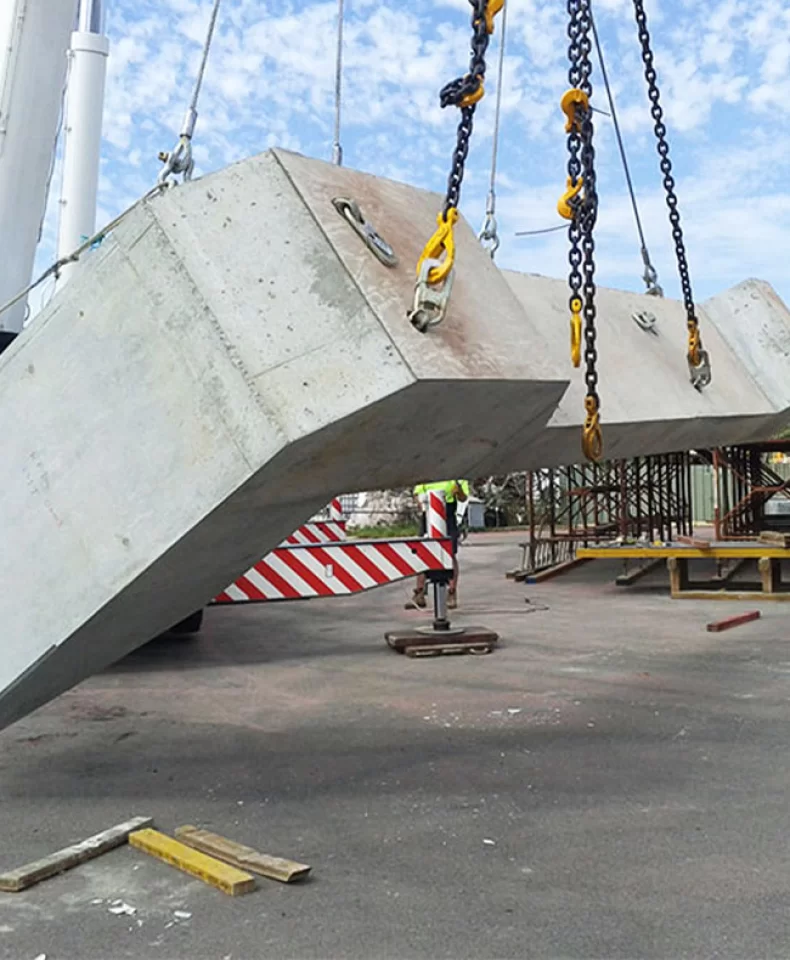
Lifting inserts are the engineered connection points that allow precast concrete slabs to be handled, transported, and installed safely. Despite their small footprint within the finished element, they carry the responsibility of transmitting every force generated during lifting, turning, and final placement. For precast manufacturers, contractors, engineers, and procurement teams, these components often determine whether a project runs smoothly or faces costly interruptions.
Most on-site lifting problems do not begin with dramatic events. They emerge from a chain of small decisions made during design, procurement, and installation. Incorrect insert selection, uneven load distribution, misplaced inserts, premature lifting, or incompatible lifting hardware can each interrupt a project. The recurring lesson is that lifting safety depends on the entire lifting system, not on the nominal capacity stamped on a single insert.
This article walks through the technical considerations that prevent those interruptions. It examines how lifting inserts work, the conditions that create site delays and lifting risks, how to select inserts that match actual project conditions, and the installation and procurement practices that protect both schedule and safety.
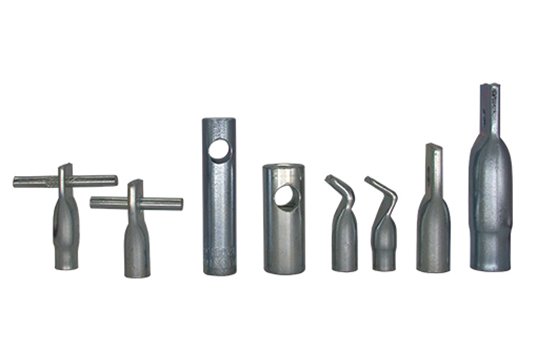
What Are Lifting Inserts for Concrete Slabs?
Definition and Working Principle
A lifting insert is a steel component embedded in concrete to create a designated connection point for lifting. Once the concrete reaches the required strength, a compatible lifting device—such as a lifting clutch, eye bolt, or specialized anchor—engages the insert, allowing the slab to be hoisted, rotated, transported, and positioned.
The load-transfer path follows a defined sequence: the lifting device transfers force into the insert, the insert transfers that force into the surrounding concrete through its anchorage geometry, and the surrounding concrete distributes the load into the slab and its reinforcement pattern. Every part of this chain must perform correctly for the lift to remain safe.
Common Types of Lifting Inserts
Several insert types serve different slab designs:
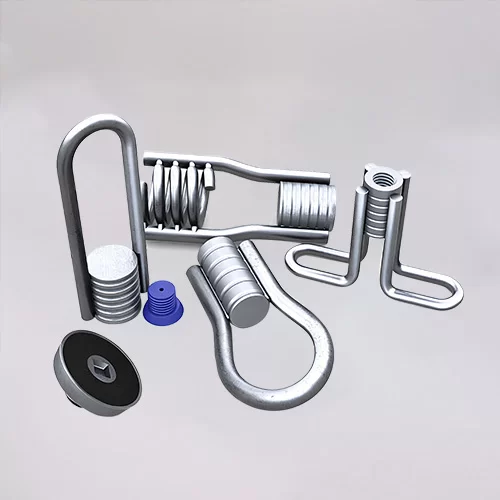
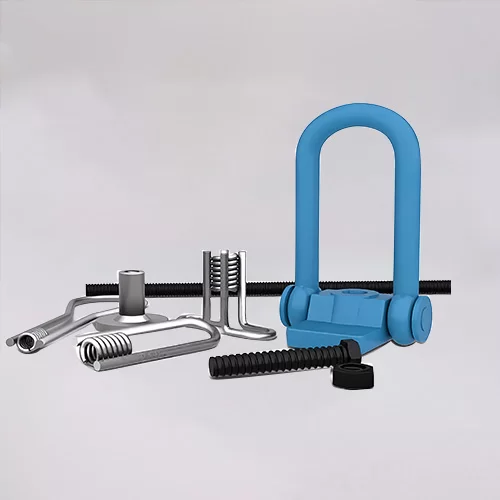
- Threaded lifting sockets provide threaded connections for compatible lifting bolts or devices, and are widely used where repeated engagement is expected and where the thread must align with the lifting direction.
- Lifting loops and coil-style inserts accept compatible lifting devices according to their design intent, often suiting architectural panels where a flush or recessed connection is preferred.
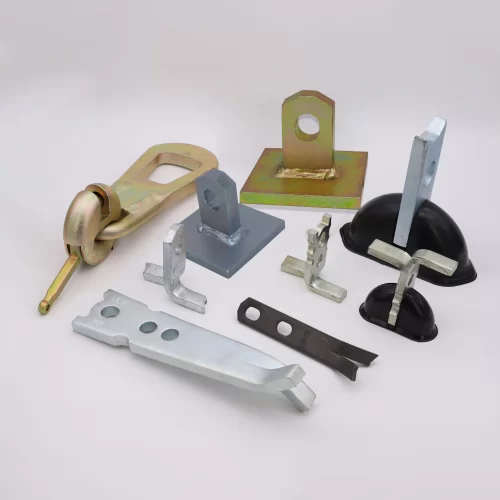
- Bar-type or reinforcement-connected inserts transfer loads through a specified anchorage structure—typically a foot, plate, or reinforcement bar tied into the slab's reinforcement cage. These are common in heavier elements where deeper embedment is available.
Each type has its own installation requirements, embedment depths, and load limitations. Selection should always follow the actual lifting design rather than familiarity with one product type.
Typical Applications
Lifting inserts appear across floor slabs and roof slabs for residential, industrial, and commercial buildings, as well as thin architectural panels, industrial flooring elements, utility vaults, and infrastructure components. The insert type and capacity vary with element mass, handling frequency, orientation during lifting, and exposure conditions.
What Causes Site Delays and Lifting Risks?
Incorrect Load Calculations
Slab weight is only the starting point for lifting calculations. The actual forces on each insert depend on the lifting-point configuration, sling angles, load distribution across multiple points, and dynamic effects during hoisting. Sling angles that diverge from the planned geometry can dramatically increase the load on individual inserts. Designers must therefore calculate forces per insert, not per slab.
Incorrect Insert Positioning and Embedment
An insert installed at the wrong depth, the wrong angle, or too close to an edge or opening cannot transfer load as designed. Consequences range from concrete cracking around the insert to local breakout, difficult clutch engagement on site, or the need to rework the slab. Securing inserts in their specified positions before concrete placement—and confirming that reinforcement and formwork do not displace them—is essential.
Insufficient Concrete Strength at Lifting
Concrete must reach the specified compressive strength before any slab is lifted. Lifting too early places unpredictable stress on a material that has not yet developed its design performance. Verifying concrete strength against the lifting plan's requirements—and confirming that ambient conditions have allowed proper curing—is non-negotiable before releasing any slab for handling.
Incompatible Lifting Hardware
A lifting insert and a lifting device must form a complete, approved system. Mismatched threads, incorrect clutches, or unapproved combinations of components from different suppliers can interrupt lifting operations, even when each component individually appears adequate. Compatible appearance or similar rated capacity does not prove system compatibility. Confirmation should come from documentation, not assumption.
How to Select the Right Lifting Inserts for Concrete Slabs
Evaluate Slab Geometry and Weight
Selection starts with the slab itself: dimensions, thickness, weight, openings, and reinforcement layout. Any of these factors can shift the slab's center of gravity or change how loads are distributed during lifting. Identifying them early prevents surprises later.
Confirm Load Capacity and Lifting Configuration
The number and location of lifting points should follow the approved lifting design, considering sling angles, load direction, turning operations, and applicable load factors. Inserts should never be selected based on total slab weight alone; each insert must be rated for the actual force it will carry.
Check Embedment and Concrete Requirements
The selected insert must suit the slab's embedment depth, edge distances, reinforcement details, and concrete strength. If the slab design cannot accommodate the insert's requirements, either the design or the insert choice must be revised before production.
Verify Material, Manufacturing Quality, and Surface Finish
Steel grade, dimensional tolerances, thread accuracy, and material consistency directly influence how the insert performs under load. Corrosion protection should match the storage, handling, and exposure conditions the insert will face. Where project specifications require it, inspection records and traceability documentation should be requested and reviewed before delivery.
Installation and Quality Control: Prevent Problems Before the First Lift
Before Concrete Pouring
Confirm drawings, insert specifications, positions, and quantities. Secure inserts so they cannot move during concrete placement and vibration. Verify that reinforcement and surrounding concrete details match the approved design.
After Casting and Before Lifting
Inspect every exposed connection, recess, thread, and the visible concrete around each lifting point. Confirm concrete strength against the lifting plan's requirements. Confirm that correct, compatible lifting devices are on site and ready for use.
During Lifting and Handling
Follow the approved lifting procedure and the equipment manufacturer's instructions. Keep personnel clear of suspended loads. If cracking, unexpected rotation, abnormal movement, or any connection issue appears, stop the operation and investigate before continuing.
Common Purchasing Mistakes That Increase Project Costs
Choosing Inserts Based on Price Alone
A low unit price is often offset by installation problems, inconsistent quality, or rework on site. Procurement decisions should weigh technical suitability, manufacturing consistency, and supplier support—not just cost per piece.
Ordering Without Complete Technical Information
Buyers should provide drawings, slab specifications, load requirements, thread details, and quantities at the quotation stage. Incomplete information frequently leads to quotation revisions, incorrect deliveries, and avoidable delays.
Ignoring Batch Consistency and Delivery Planning
Consistent dimensions, clear product identification, and appropriate packaging reduce errors on site. Coordinated production planning and delivery scheduling help maintain both the casting schedule and the installation timeline.
Practical Checklist for Buyers and Project Engineers
Why Choose HULK Metal for Precast Concrete Lifting Accessories?
HULK Metal supports buyers with a structured path through customized production, manufacturing quality control, and integrated supply chain coordination. Project-specific dimensions, materials, thread specifications, and finishes are reviewed against technical requirements before production begins. Material verification, dimensional inspection, and production consistency are built into the manufacturing workflow. Procurement, manufacturing, inspection, packaging, and logistics are coordinated under one roof, shortening communication paths and reducing scheduling friction.
The team also assists buyers in clarifying drawings, application requirements, and product specifications before orders are finalized. After delivery, support extends to returns, replacements, or replenishment when quality issues or shortages arise. The aim is to reduce procurement uncertainty and improve delivery coordination, while recognizing that lifting safety remains a shared responsibility across designer, supplier, and site team.
Preventing lifting risks begins long before the first hoist. It starts with correct design assumptions, suitable insert selection, accurate installation, and verified concrete strength. Compatible hardware, consistent product quality, and timely procurement each remove a potential source of avoidable interruption.
Buyers and engineers who evaluate lifting inserts against the actual slab and lifting conditions—rather than nominal capacity or unit price alone—consistently experience smoother projects. If you are reviewing lifting insert options for an upcoming slab program, sharing your drawings, technical specifications, and order quantities with HULK Metal can open a constructive conversation about the most suitable precast concrete lifting accessories for your project.
Article Navigation
PRECAST CONCRETE ACCESSORIES
Other Precast Concrete Accessories You Might Want to Know
You can click to learn more about HULK Metal precast concrete accessories such as lifting anchors, precast sockets, spread anchors, shuttering magnets, cast-in channels, wire loop boxes, and other precast concrete accessories you might want to know.